

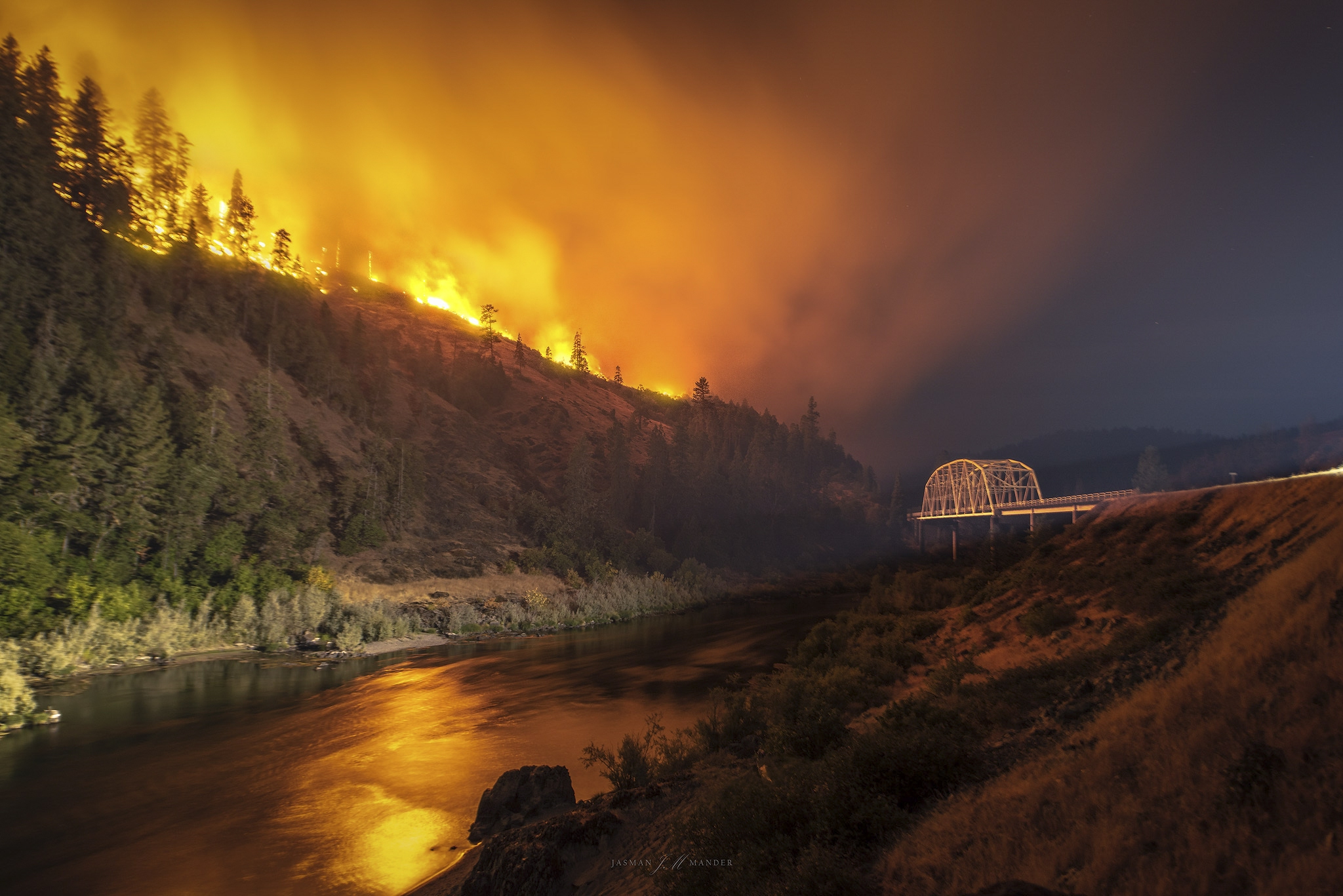
Across western North America salmonid species are an important source of food and livelihoods, and carry strong cultural significance for local and Tribal communities. These species are a key component of ecosystem structure and nutrient flow. As wildfires increase in size and severity across the region, fire resilience has become vital for socio-ecological systems to thrive. Though fire is an integral ecological process, it poses challenges for the restorative management of salmonids, and maintaining their fire resilience is critical. Historically, efforts to restore dwindling salmonid populations and efforts to increase forest resilience to fire have been managed by distinct policies and agencies. A combined approach is urgently needed to address salmonid recovery and wildfire resilience in the face of climate change and corresponding wildfire intensity.
OUR APPROACH: To improve the health and resilience of salmonids, forests and the human communities that rely on them in wildfire-prone areas, this working group will combine research on forest management for wildfire resilience with salmonid restoration and apply this to local conservation efforts. The group will create a salmonid-fire-vegetation database to quantify fish-fire relationships, identify factors that support fish resilience to fire, and develop tools for integrating wildfire management with salmonid recovery. The group will also work to identify communities where managers can be engaged to adapt and apply this integrated framework to meet their needs.
Team Status:
Leaders
Ailene Ettinger
Elaine Harvey
Brian Harvey
Ellen Wohl
Members
Zoe Hanley
Maia Murphy-Williams
Michele Buonanduci
Arianna Goodman
David Roon
Philip North
Clint Chandler
Rebecca Flitcroft
Brooke Penaluna
Jamie Robertson
Michael Case
Emily Howe
Max Lambert
Advisors
Eric Delvin
Ryan Haugo