
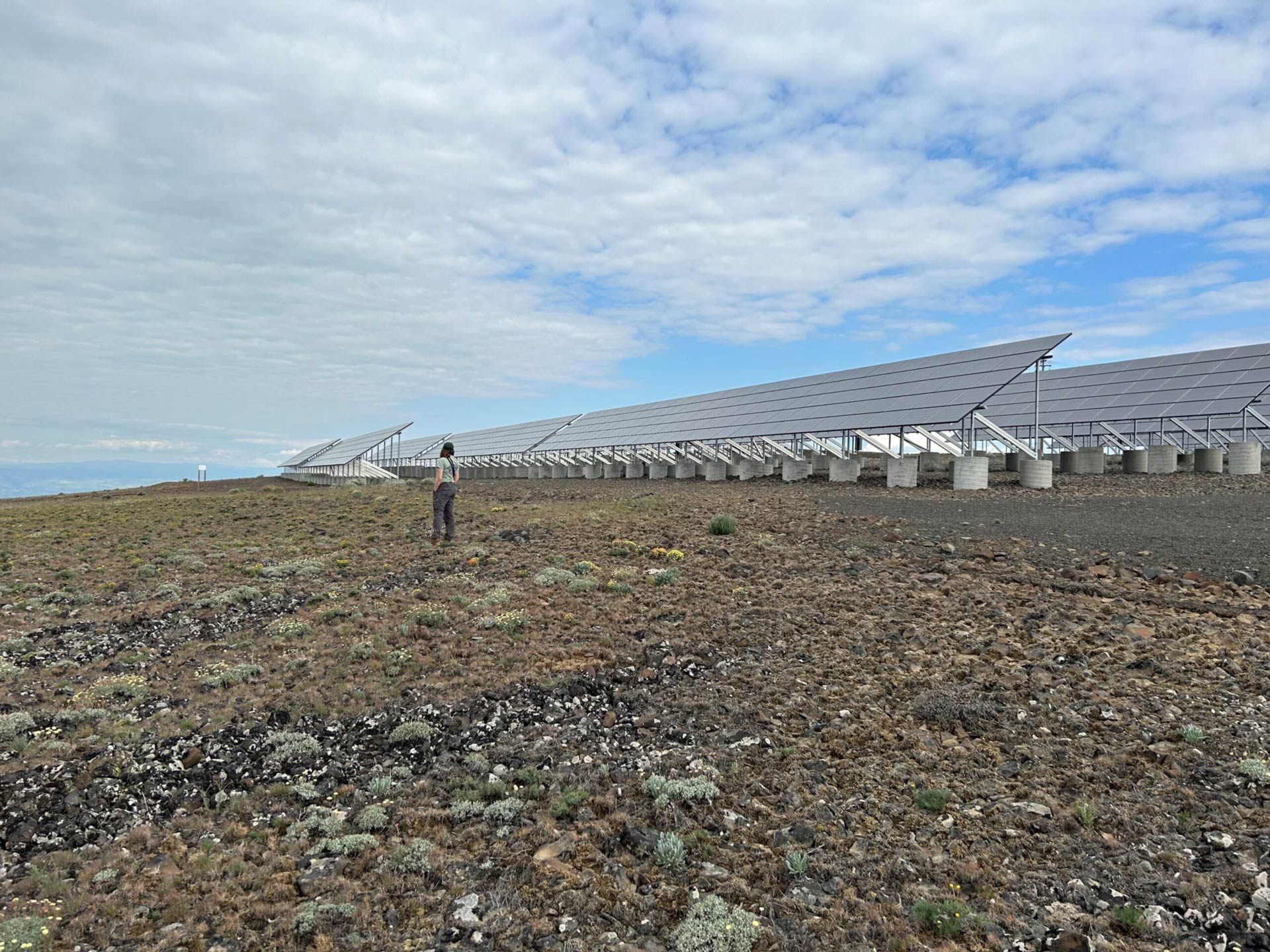
Utility-scale solar photovoltaics are one of the most affordable and deployable energy sources available. Carbon-free resources are urgently needed to replace fossil fuels and meet rising energy demands. However, the potential impacts of solar on ecosystems, Tribes, and local communities have caused conflicts.
We will develop practical strategies for improving utility-scale solar energy across the arid lands of Idaho, Oregon, and Washington by convening representatives from the renewable industry, and government agencies, Tribes, conservation groups, and research institutions to investigate complex factors shaping solar deployment in our landscape.
Team Status:
Leaders
David Trimbach
Stephanie Lenhart
Taylor Ganz
Members
Diane Brandt
Casey MacLean
Eric Schauber
Kyle Maki
Sophie Gilbert
Loran Shallenberger
Nick de Vries
Jacob Goodspeed
Karl Kosciuch
Jamie Wilson
Dennis Daw
Lauren Noeker
Maddie Nolan
Jorden Smith
Zoe Hanley
Max Lambert
Maia Murphy-Williams
Advisors
Peter Gower
Jillian Hanson