
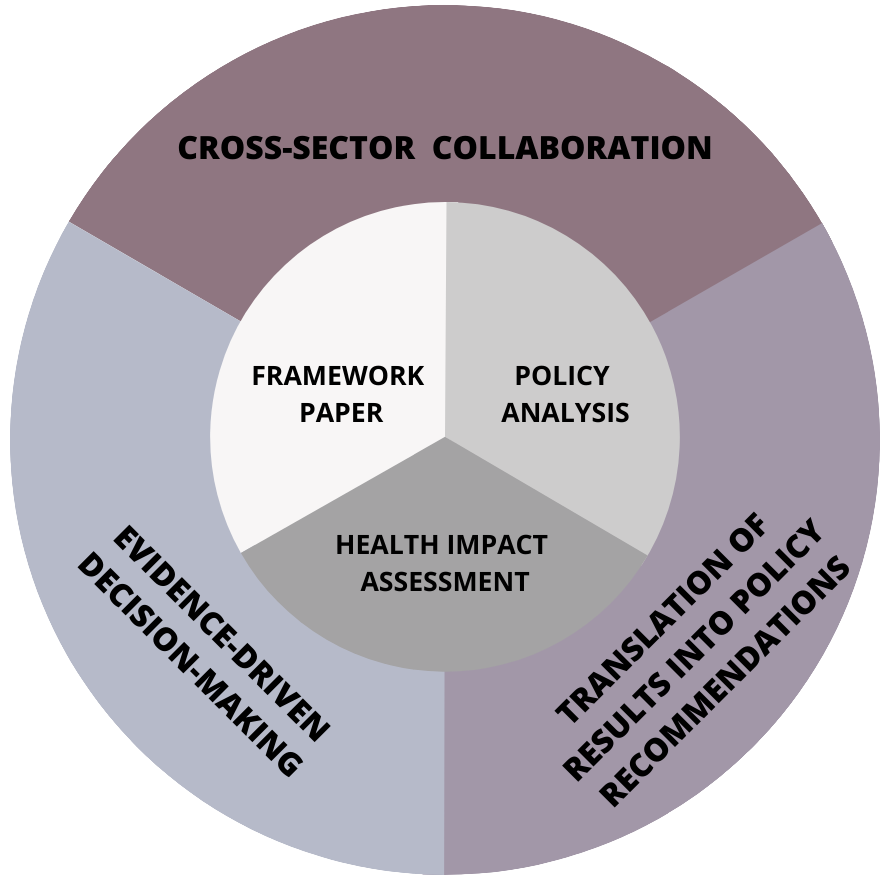
This working group will collaborate with stakeholders to more fully incorporate human health implications from wild and managed forest fires into forest restoration planning and implementation in the Western U.S. The team will catalogue approaches based on the best available evidence and develop a consensus-driven, evidence-based approach to integrate human health considerations into spatial and temporal planning for forest management. The team will also develop strategies for communicating and coordinating relative human health implications for stakeholders and policymakers involved in forest management and the mitigation of health risks from fire smoke.
Our Approach: Our team integrates expertise in the conservation and health sectors to combine scientific evidence and stakeholder input to evaluate the human health implications of wildfires as compared to ecological restoration focused forest management. We are using existing studies as well as novel modelling efforts to better understand the health implications of policies and practices related to forest and fire management. This allows a grounded approach to develop products to support communication, coordination, and decision-making among stakeholders involved in — and affected by — forest restoration, including managed fires.
Team Status:
Leaders
Ryan Haugo
June Spector
Jen Krenz
Nick Wolff
Members
John Abatzoglou
Alison Cullen
Joe Wilkins
John Flunker
Reese Lolley
Claire Schollaert
Leah Wood
Savannah D’Evelyn
Julian Marshall
Charles Maxwell
Andrew Merschel
Kerry Metlen
Kari Nadeau
Janice Peterson
Haiganoush Preisler
Susan Prichard
Mary Prunicki
Brian Robinson
Jens Stevens
Leland Tarnay
Chris Tessum
Carolyn Whitaker
Karen Zirkle
Miriam Marlier
Jamie Lydersen
Craig Clements
Stacy Drury
Julie Fox
Vanessa Galaviz
Gillian Gawne-Mittelstaedt
David Grant
Keala Hagmann
Sarah Henderson
Blane Heumann
Sean Hopkins
Fay Johnston
Jihoon Jung
Van Kane
Eddie Kasner
Meg Krawchuk
Phil Levin
Pete Caligiuri
Tania Busch Isaksen
James Markwiese
Jill Baumgartner
Ana Barros
Ernesto Alvarado
Paul Hessburg
Advisors
Ed Smith
Yuta Masuda