
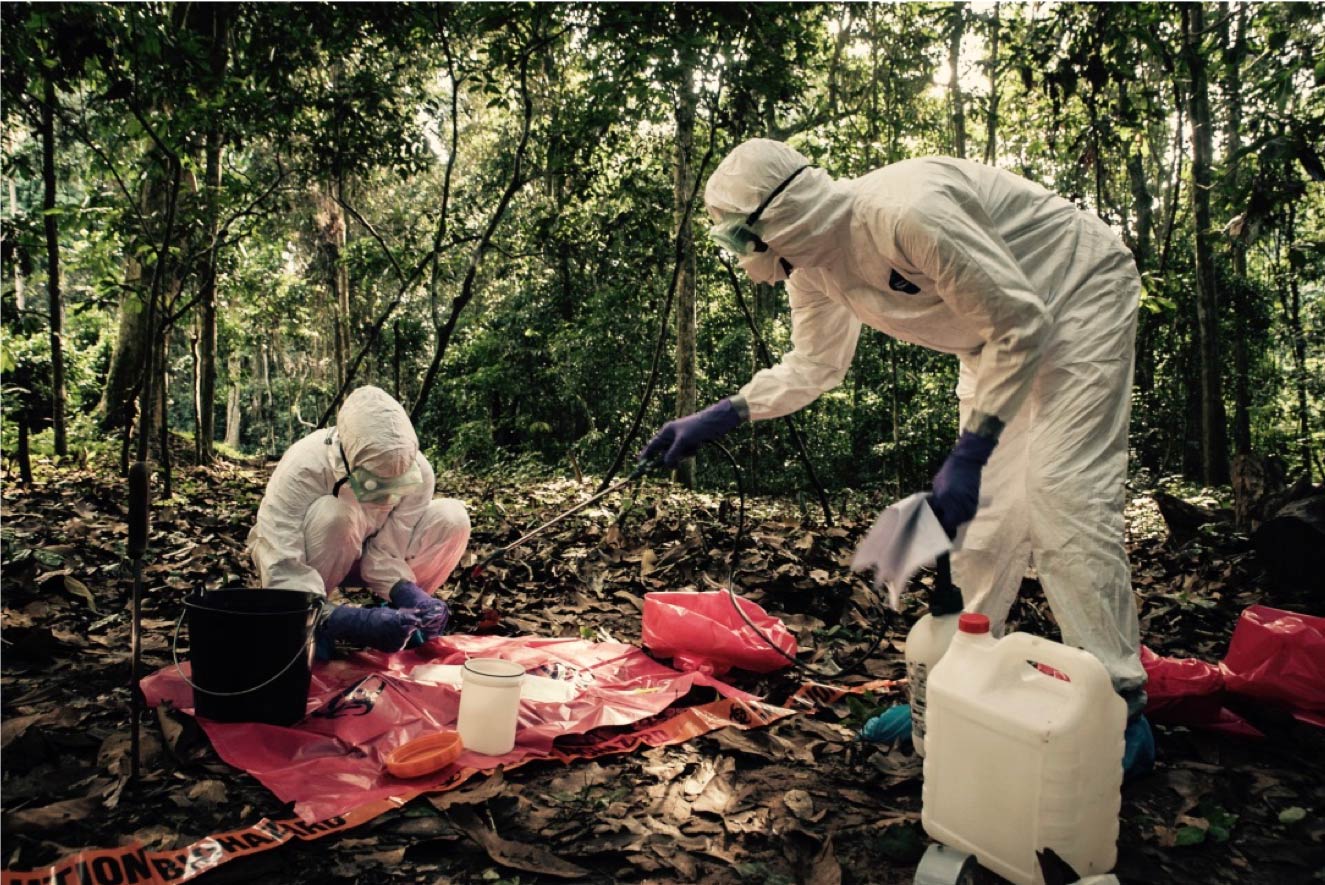
Human encroachments into natural landscapes increase pathogen transmission between wildlife, domestic animals, and humans. This threatens critically endangered wildlife species, food security and the cultural fabric of Indigenous communities, and even upends global economies and ways of living.
Despite broad international regulations requiring wildlife health surveillance systems, few countries generate wildlife health intelligence through operational and sustainable systems.
How can we sustain wildlife health surveillance systems across low- and middle-income countries (LMICs)? How can we identify priorities, measure benefits, and improve efficiency? How can we formalize a coordinated global support system?
OUR APPROACH: Wildlife Health Intelligence Network (WHIN) is a consortium of organizations that all believe that the solutions to scaling wildlife health surveillance globally go beyond the capacity of a single organization. Our WHIN working group will bridge disciplines and scales to identify collaborative and evidence-based solutions to address the gap between international guidelines and field implementation. First, a consortium will be formalized to design a coherent framework for the regulation and implementation of wildlife health surveillance systems globally. Second, available data will be synthesized to create a strong evidence base for the efficient scaling of wildlife health surveillance systems.
Team Status:
1a. Prioritize surveillance to focus on high-risk interfaces by synthesizing data on health impacts on wildlife, existing wildlife health surveillance systems, missing cases of wildlife health events and detection bias, and socio-ecological interfaces and high spillover risk practices;
1b. Address sustainability through analyses of data and creation of tools to estimate cost effectiveness and benefits of surveillance, drawing from existing wildlife or livestock surveillance systems;
2a. Communicate a co-developed theory of change that connects multilateral agreements (e.g., Sustainable Development Goals) and international frameworks to the practical implementation of wildlife surveillance systems;
2b. Formalize the consortium through the drafting of a collaboration agreement with endorsements from respective member institutions describing how we work together in the long term and identify capabilities, synergies, and gaps among stakeholders in the implementation of sustainable wildlife health surveillance globally.
Leaders
Mathieu Pruvot
Sarah Olson
Members
Nicholas Lyons
Kacey Yellowbird
Damien Joly
Liz Paola Noguera Zayas
Kim Pepin
Sarin Suwanpakdee
Marcy Uhart
Bernard Bett
Keren Cox-Witton
Susan Kutz
Jonathan Sleeman
François Diaz
Oliver Morgan
Advisors
Claire Cayol
Kevin Brown
Dina Saulo
Clare Death